
Most of us treat creativity like a light switch we can’t find in the dark. We sit at a desk, stare at white canvas, an empty word document, or a blank spreadsheet, and try to muscle an idea into existence. It’s exhausting. It feels like trying to start an old snow blower in mid-January you’re pulling the cord, your hands are freezing, and nothing is happening but a lot of noise.
Growing up in Kansas, I watched my dad run an accounting firm. He wasn’t a farmer, but he had a farmer’s clock. He was out the door before the sun hit the horizon and didn't come back until long after it set. My mom, a former stenographer, kept five of us from burning the house down. They didn't have "creative" jobs in the way people talk about them in California. They had practical, gritty, white-collar jobs that served people who got their hands dirty.
But here’s what I noticed: the solutions to the most complex tax problems or the best ways to keep the family budget afloat never came during the frantic 2:00 PM rush. They came in the quiet. They came when my dad was driving across the state to a satellite office, staring at those massive, flat horizons, or when mom was finally sitting down after we all went to bed.
That’s because creativity isn't about being "artistic." It’s about how your brain solves problems when you aren't yelling at it to hurry up.
The Open and Closed Mode
If you want to understand how this actually works without the "woo-woo" fluff, you need to read Creativity by John Cleese. (Full disclosure: that’s an affiliate link).
Cleese talks about two states of mind: the "Closed Mode" and the "Open Mode."
The Closed Mode is where most of us live. It’s the state of getting things done. It’s being economical with your time. It’s the mode my dad was in when he was grinding through audits. It’s necessary, but it is the absolute death of new ideas. In this mode, you’re too stressed and too purposeful to see a new perspective.
The Open Mode is where the magic happens. It’s a relaxed, expansive, and playful state. It’s the subconscious finally getting a word in edgewise. But let’s be real: it’s hard to get into the open mode when you’re worried about the price of gas, when you changed the tires on your car, or the fact that the basement carpet (the one under the vertical wood paneling at your grandma’s) needs to be ripped out.
Where Ideas Really Come From
Ideas don't come from a vacuum. They come from the subconscious processing everything you’ve fed it.
When you stop "trying," your brain keeps working. It’s like slow-cooking a roast. You can’t make it go faster by turning up the heat; you’ll just burn the outside and leave the middle raw. You have to let it sit.
John Cleese argues that creativity is a matter of creating a "boundary of space" and a "boundary of time." You have to carve out a moment where you are allowed to be "unproductive." For a lot of us, that feels like a sin. We were raised to believe that if you aren't working, you're lazy, that antsy feeling where one side of your brain is telling you to get moving. But sitting on the porch watching a Kansas sunset isn't just aesthetic appreciation. It’s giving your subconscious the room to breathe.
The Practical Reality
Is this easy? No. Life is heavy right now. Most people are "going through it," dealing with the grit of reality that doesn't care about your creative breakthrough. You might feel too tired to be "open."
But here is the truth: the best ideas for your business, your family, or your art are already inside you. They are just buried under the noise of the "Closed Mode."
If you want to learn how to actually access that part of your brain without feeling like a flake, grab Cleese’s book. It’s short. It’s practical. It doesn't use big words to try to sound smart. It’s just honest.
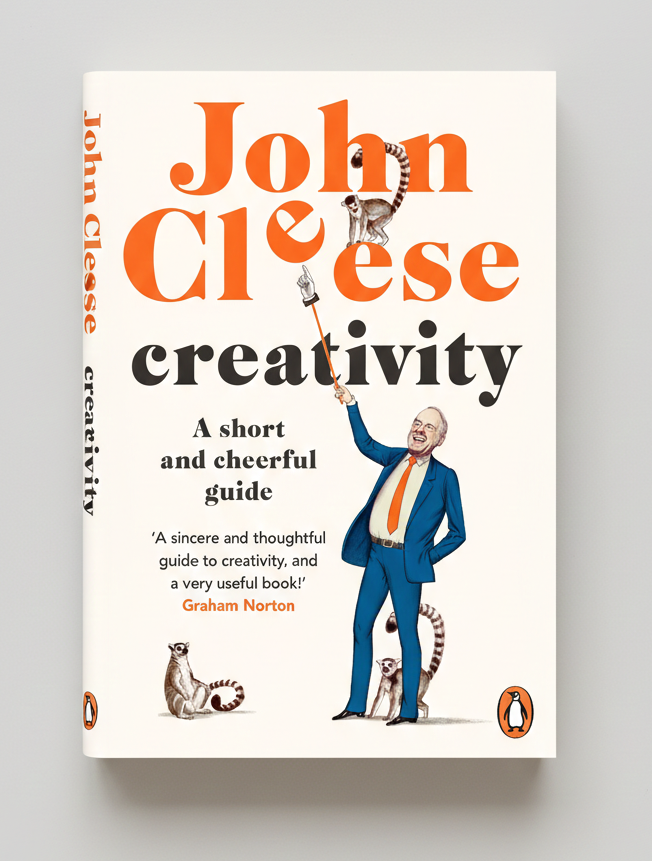
Creativity
John Cleese
A short and cheerful guide
Affiliate Link, helps me fund this site.