
You see the price tag for the original $8,000, and your stomach drops. You compare it to a $25 or $40 print sitting in a rack nearby and wonder if the artist is just trying to pay off their mortgage with one sale.
As someone who has spent years in the trenches of digital animation for game studios and traditional painting in my own studio, I can tell you: the price isn't arbitrary. It’s not about "prestige". It’s about fixed costs and the brutal reality of how time is amortized.
The "Original" Problem: Fixed Costs vs. Variable Costs
When I’m working on a custom logo or a traditional oil painting, I’m dealing with Fixed Costs. These are the expenses that exist regardless of whether I sell one copy or a thousand.
The Labor Sink: If I spend 40 hours on a painting, those hours are "sunk". Unlike a factory line where efficiency increases with volume, a custom piece is a one-off.
The Materials: Professional-grade pigments, canvases, or even the high-end software subscriptions for 3D modeling—which is why I used Blender for Space Truck Rodeo—aren't cheap.
The Studio Overhead: My studio sits right above my parents' accounting firm back here in Kansas. Even though I built it myself, it still costs money to heat, light, and maintain.
If the original piece is the only thing being sold, that one sale has to cover 100% of the labor and materials. That’s why a custom piece might be $1,200 while a print is much less.
Amortization: The Art of Spreading the Cost
The reason prints are "cheap" is a concept my dad, the public accountant, would appreciate: Amortization. Think of the original artwork as the "Research and Development" phase of a product.
In the art world, it works like this:
The Original: Carries the weight of the initial creation.
The Print: A low-cost reproduction that allows the artist to "pay off" the time spent on the original over a longer period.
When you buy a print—like my Woodinville River Otter Painting or the Oil on the Kansas Plains—you aren't just paying for paper and ink. You’re paying a small fraction of the hours it took to create the soul of that image.

Woodinville River Otter Print
Print - $23.99
Framed Original @
The Vernon Filley Gallery
- $250.00
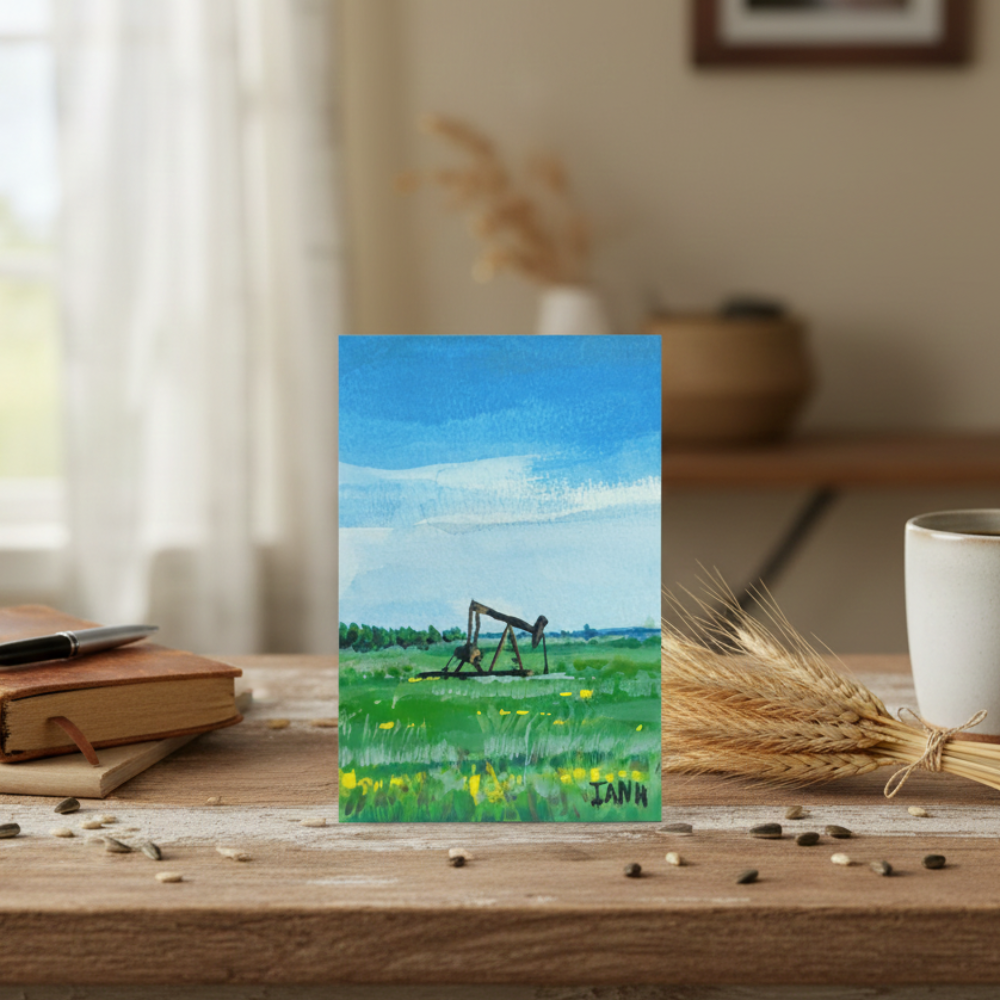
Oil on the Kansas Plains
Original - SOLD $73.92
Postcard Print - $6.00
The Reality of Custom Work
The truth is, custom art is expensive because it’s a service, not just a product. When I take on a freelance branding project or a custom painting, I’m not just "drawing". I’m researching, iterating, and often throwing away hours of work that didn't meet the mark.
It’s a bit like taking a toddler to Mass—you can plan for it to be peaceful and organized, but the reality is usually chaotic, and it takes twice as much energy as you expected just to get through it. Custom art is the same. There are revisions, technical glitches, and the simple fact that starting from a blank canvas is the hardest part of the job.
Why It Matters to You
If you’re looking to decorate a home or brand a business, understanding this helps you budget:
Buy the Original if you want an investment that holds the physical DNA of the artist's labor.
Buy the Print if you want the aesthetic value while benefiting from the fact that others are helping share the cost of the creation time. For example, pieces like my Meal Blessing Wall Art offer that vintage, handcrafted feel without the "custom-only" price tag.